How Deep Should You Learn Chess Openings?
A practical framework by rating
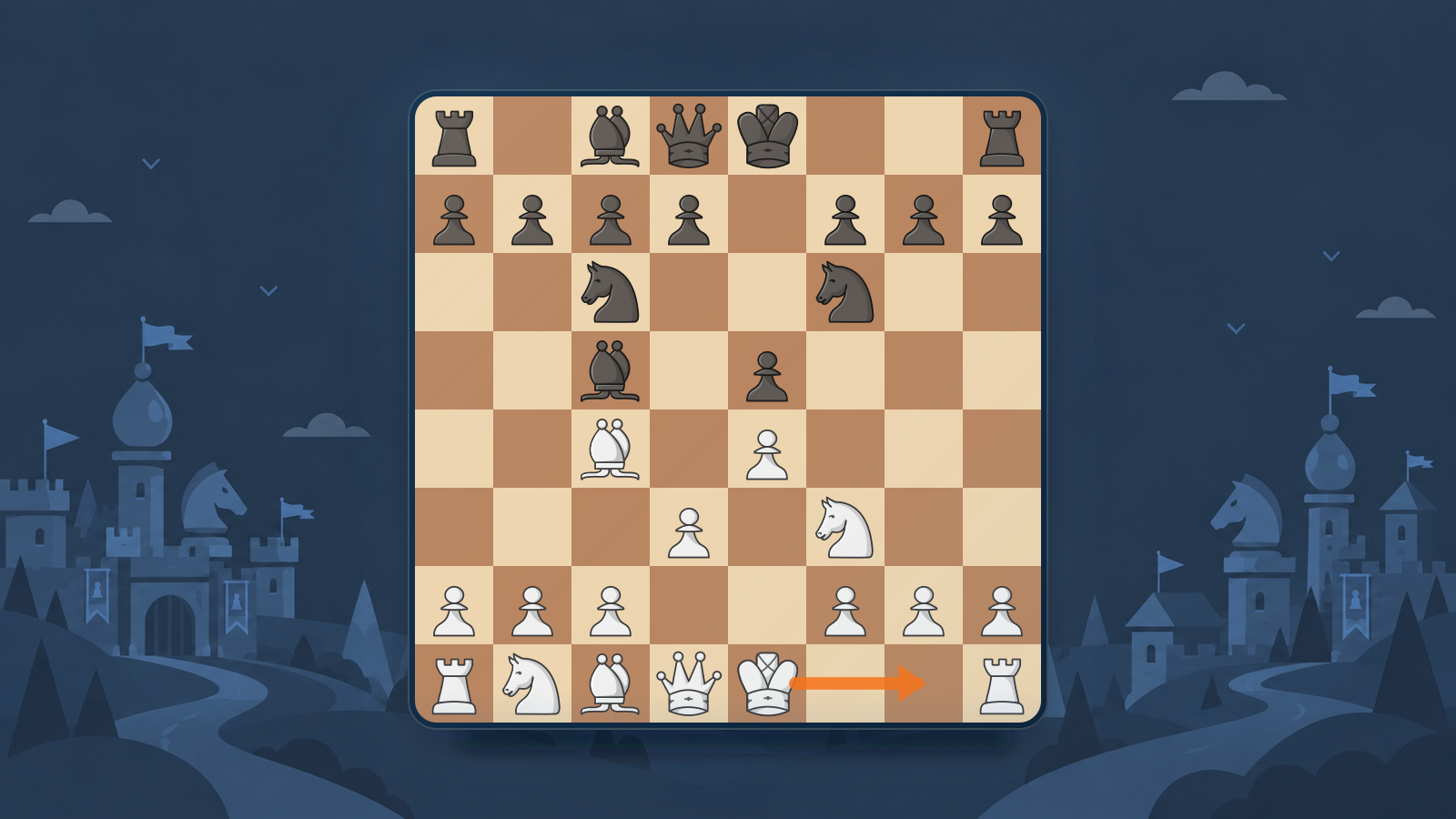
For many beginners, learning the first 3–5 moves of a small repertoire is enough to start. The useful depth depends on your rating, the openings you play, and what is actually going wrong in your games. If you regularly reach playable positions and then lose to tactics, adding more opening theory will not solve the main problem.
Why Opening Depth Should Match Your Rating Level
Opening depth is not a fixed target. A player rated 800 and a player rated 1900 usually face different problems over the board, so the same amount of preparation will not give them the same return. Treat the rating bands below as starting points, then adjust them using your own games.
What Opening Theory Actually Is (and Isn't)
Opening theory refers to the accumulated body of analyzed, named sequences that begin a chess game. The Encyclopaedia of Chess Openings (ECO) organizes this material across five volumes (labeled A through E), covering thousands of named lines and variations. That scope alone signals how deep the rabbit hole goes. But theory is not a rulebook — it is a record of what strong players have found to work, and why. The "why" matters far more than the move order itself. Understanding that 1.e4 e5 2.Nf3 fights for central control and rapid development is more durable knowledge than memorizing the next eight moves of the Ruy López, because that understanding travels with you into positions your opponent creates that no book anticipated.
Pro tip: If you can't explain the purpose of a move in one sentence, you haven't learned it — you've only memorized it. Memorized moves evaporate under pressure; understood ideas don't.
The Rating Ladder Framework Explained
The Rating Ladder Framework organizes opening study into five broad bands. An Elo rating is a numerical measure of relative playing strength. Below 1000, the emphasis is on principles and a few dependable moves. From 1000 to 1500, a small repertoire can grow to 5–8 moves in common positions. From 1500 to 2000, connecting 8–12 moves of preparation to middlegame plans becomes more useful. Above 2000, deeper and more opponent-specific work can offer a greater return.
Under 1000 Elo: Learn Principles and 3–5 Moves
At this level, opponents routinely play moves that no opening book has ever recommended, which means any sequence you've drilled will dissolve within the first few moves. Spending hours on theory is preparation for a game that simply won't happen.
What actually decides games at this rating is far more fundamental: who develops their pieces, who controls the center, and who keeps their king safe. These are the three core principles of the opening phase, and they apply regardless of what your opponent does.
What to Study Instead of Opening Lines
- Move each piece once before moving any piece twice
- Place pawns or pieces on central squares (e4, d4, e5, d5) early
- Castle within the first ten moves to protect your king
- Avoid moving the queen out early, where it can be chased by developing moves
- Connect your rooks by clearing the back rank
These five habits will outperform any memorized line at this level because they remain useful no matter what your opponent plays.

| 1 | e4 | e5 |
| 2 | Nf3 | Nc6 |
| 3 | Bc4 | Nf6 |
| 4 | d3 | Bc5 |
| 5 | O-O |
Pros and Cons of This Approach
The clear advantage is transferability. Principles work in every game, while memorized lines only work when your opponent cooperates. A beginner who understands why knights belong near the center will make reasonable moves instinctively, even in unfamiliar positions.
The tradeoff is that principles alone won't tell you what to do when your opponent plays something sharp or unusual. That gap is real, but it's best filled by solving tactics puzzles rather than adding more opening theory — tactical errors end far more games at this level than opening mistakes do.
1000–1500 Elo: Go 5–8 Moves Deep with a Simple Repertoire
Players in the 1000–1500 range increasingly reach recognizable opening positions, so a little more preparation can help. Five to eight moves is a useful target for the lines that occur often—not a requirement to memorize every branch to that depth.
Building a Minimal, Consistent Repertoire
Choosing openings with clear, repeatable ideas is the foundation of a useful repertoire at this level. The London System and Italian Game are both reasonable starting points as White because their early plans are easy to explain. Pick one first-move plan rather than trying to learn both at once.
A minimal repertoire for this range might look like this:
One solid opening as White
| 1 | d4 | d5 |
| 2 | Nf3 | Nf6 |
| 3 | Bf4 |
- One response to 1.e4 as Black (for example, 1...e5 with natural development)
- One response to 1.d4 as Black (for example, a simple ...d5 and ...e6 setup)
Keeping the repertoire this narrow forces you to understand the positions deeply rather than skimming across dozens of variations you'll rarely reach.
Pros and Cons of This Approach
The primary advantage is consistency. Seeing the same pawn structures repeatedly accelerates pattern recognition, which transfers directly into middlegame and endgame decisions. The tradeoff is that a narrow repertoire can feel limiting when opponents play unusual moves early — but at this level, that deviation is actually an opportunity, since understanding your opening's core ideas gives you a reliable framework to fall back on even when the position goes off-script.
1500–2000 Elo: Extend to 8–12 Moves and Learn Middlegame Plans
Club players in the 1500–2000 range can often usefully prepare 8–12 moves in their recurring lines—but only if deeper means understanding, not just memorizing. Opponents are more likely to follow established theory long enough for those positions to appear. Every additional move should connect to a concrete middlegame plan, not just a sequence to recite.
Connecting Opening Lines to Middlegame Plans
Pawn structure is the bridge between your opening and your middlegame. When you study a line in the Ruy López or the Queen's Gambit Declined, the real question isn't "what's the next move?" — it's "what does this pawn structure tell me to do next?" A player who understands that an isolated queen's pawn (IQP) demands active piece play will navigate the middlegame far better than one who memorized twelve moves and then froze.
Two concepts become genuinely useful at this level. The first is transposition — when different move orders lead to the same position, allowing you to steer games toward familiar territory regardless of how your opponent opens. The second is prophylaxis, which simply means anticipating your opponent's best plan and preventing it before it starts. Neither concept requires memorizing more lines; both require thinking about the position more deeply.
Pro tip: When you add a new line to your repertoire, write down in plain language what your pieces are trying to do by move 12. If you can't describe the plan in one sentence, you've memorized the moves without learning the opening.
Pros and Cons of This Approach
Studying 8–12 moves deep with a plan-based focus can give you a meaningful edge in club games and builds pattern recognition that transfers across similar positions. The tradeoff is that this level of study demands more time and active thinking than passive memorization—you need to review your games and ask why a line works, not just whether it does.
- Benefit: Pawn structure knowledge applies across dozens of related positions, multiplying the return on your study time.
- Benefit: Understanding transpositions lets you reach your preferred setups even when opponents deviate early.
- Tradeoff: Without pairing lines with plans, deeper preparation can create false confidence — you'll reach move 10 and still not know what you're doing.
| 1 | d4 | d5 |
| 2 | c4 | e6 |
| 3 | Nc3 | Nf6 |
| 1 | d4 | Nf6 |
| 2 | c4 | e6 |
| 3 | Nc3 | d5 |
2000+ Elo: Deep Theory and Opponent Preparation
Serious competitive players above 2000 often have a different relationship with opening theory. Opponents arrive with prepared lines, deviations may be deliberate, and a well-chosen novelty can create an early practical advantage. Preparing 12–20 moves or more in critical variations can now generate a real return, especially when paired with tournament and opponent preparation.
When Engine Prep and Novelties Become Worth It
Engine-assisted preparation becomes more useful here because basic tactical errors are less frequent and opening subtleties are more likely to survive into the middlegame. Tools such as Chessable and Anki use spaced repetition to help players retain dense theoretical lines. The Encyclopaedia of Chess Openings (ECO), a five-volume reference classifying major opening systems, can also become more practical at this level. A novelty—a move that departs from established theory or the relevant game databases—can become a serious competitive weapon rather than a curiosity.
Pros and Cons of This Approach
- Preparation can neutralize stronger opponents by steering games into positions they haven't studied
- Spaced repetition tools dramatically reduce the time needed to maintain large repertoires
- Understanding engine evaluations at move 15+ sharpens positional judgment across the whole game
- Deep prep creates psychological pressure, even when the opponent doesn't fall into the prepared line
The downside is that this approach demands significant time investment and becomes counterproductive if applied too early — which is precisely why the lower tiers in this framework prioritize ideas over memorization.
The Mistake: Over-Studying Openings Instead of Tactics
Spending hours memorizing opening variations while neglecting tactics is a poor trade for most beginners. Review a sample of your own losses: if missed forks, undefended pieces, or one-move threats decide more games than your opening choices, tactics deserve the larger share of your study time.
So should you focus on openings or tactics first? For most newer players, tactics should receive more time, while a small opening repertoire prevents avoidable early problems. A perfectly prepared Sicilian Defense means little if you hang your queen on move twelve.
Pro tip: Compare the first unfamiliar opening position in each game with the move that actually decided it. Study the category that repeatedly costs you points.
The time-allocation problem shows up in a predictable pattern among developing players:
- Memorizing 15-move lines in the Ruy Lopez while losing pieces to simple one-move threats
- Knowing the name of every opening variation but being unable to convert a king-and-pawn endgame
- Exiting prepared lines by move four because opponents at lower levels routinely play irregular or unorthodox moves
The Encyclopaedia of Chess Openings (ECO) spans five entire volumes — A through E — cataloguing thousands of lines. No beginner can or should engage with that depth. The players who improve fastest treat openings as a brief, principled launch pad and invest the bulk of their study time where the real mistakes actually happen.
Opening Study by Rating: Quick-Reference Summary
The table below consolidates the rating-based framework covered throughout this article into a single reference, so you can locate your current level and immediately identify the right depth, method, openings, and time allocation for your study sessions.
| Rating | Study Depth | Focus | Study Split |
| Under 1000 | 3-5 moves | Tactics first | 10% openings |
| 1000-1500 | 5-8 moves | Plans, not lines | 10-15% openings |
| 1500-2000 | 8-12 moves | Pawn structures | 15-20% openings |
| 2000+ | 12-20+ moves | Theory, novelties | 20-30% openings |
| GM level | 20-30+ moves | Sharp preparation | 30%+ openings |
The core pattern across all five bands is that depth increases gradually while the emphasis on principles and tactics never disappears. Every level benefits from understanding the reason behind moves—pawn-structure goals, piece activity, and king safety—rather than relying on rote memorization. Use the table as a checkpoint, then adjust it when your own games show that you need more or less depth.
Your Opening Study Plan: Start Simple, Scale with Rating
The simplest study plan is to use your rating as an initial guide and your games as the final judge. Under 1000, learn opening principles and three to five dependable moves. From 1000 to 1500, build a narrow repertoire and extend the positions you encounter most often to five to eight moves.
Your next step is straightforward: choose one first-move plan as White and dependable responses to 1.e4 and 1.d4 as Black. Learn the reason behind each move, play games, and only add depth where your reviews expose a recurring gap. Use the four-week beginner study plan to build that repertoire, and spend the larger part of your practice on tactical patterns while they remain the main source of mistakes.